
Global Wealth Trends & Opportunities

Navigating Global Wealth Opportunities
In today’s interconnected world, global wealth trends and opportunities are shaping how investors manage their assets and build long-term wealth. The rise of emerging markets, shifting economic landscapes, and increasing opportunities in international investments present a dynamic environment for investors seeking diversification and growth. This chapter will explore emerging markets, global economic factors, and offshore banking strategies, helping you understand how to navigate and capitalize on global wealth opportunities.
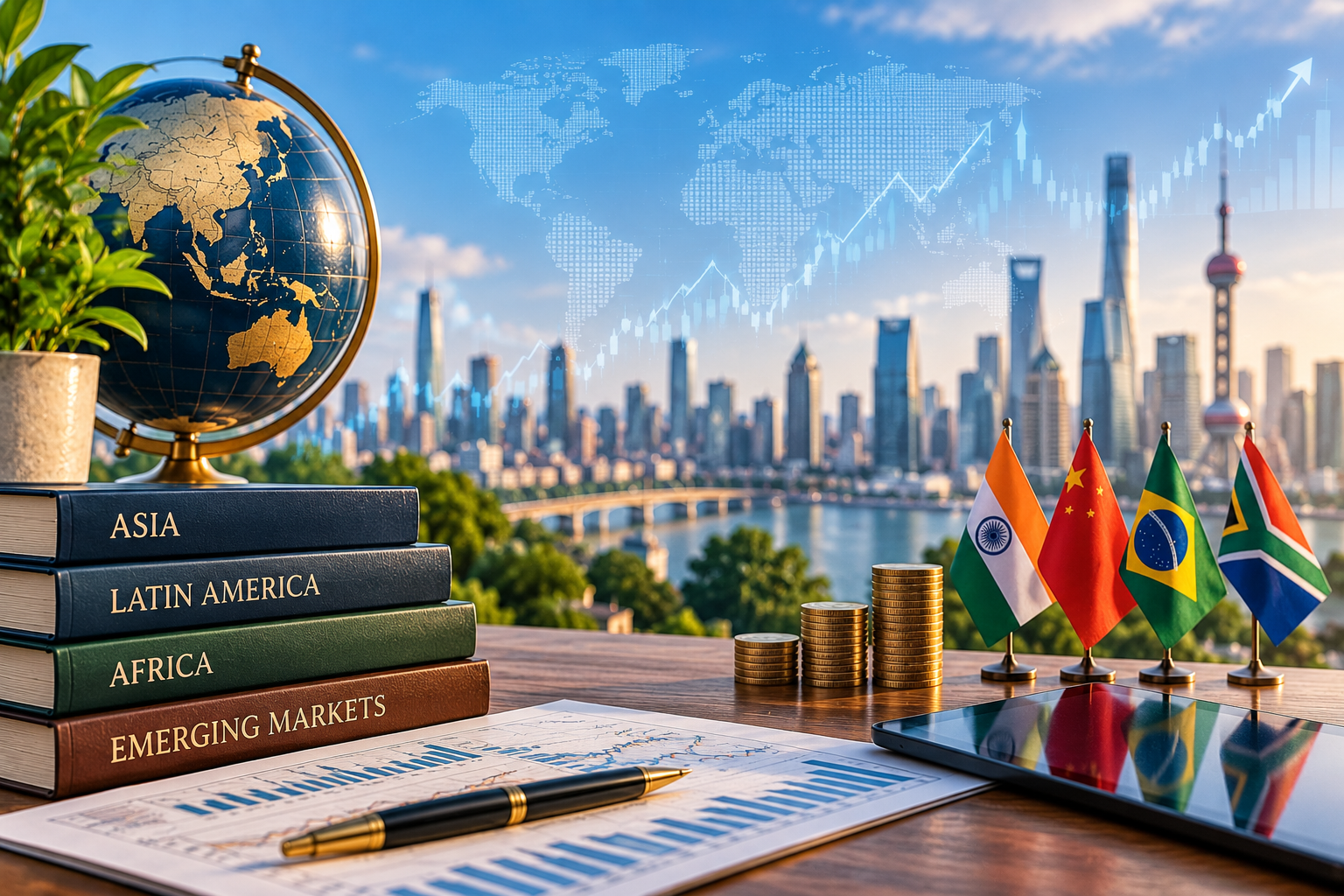
Emerging Markets and International Investments
Emerging markets refer to countries or regions that are in the process of industrialization and rapid economic growth. These markets often present significant opportunities for investors willing to take on higher risk in exchange for potentially higher returns. International investments, including those in both developed and emerging markets, can provide a way to diversify portfolios and capture growth outside of domestic economies.
What Are Emerging Markets?
Emerging markets are economies that are transitioning from lower income levels toward greater economic development, often with a growing middle class, expanding infrastructure, and increasing industrialization. These markets may offer significant growth potential but can also experience greater volatility and market-specific risks than developed markets.
- Examples of Emerging Markets:
- Major Emerging Markets: As of 2026, MSCI’s Emerging Markets Index spans 24 countries, including China, India, Taiwan, South Korea, Brazil, Mexico, Indonesia, Saudi Arabia, South Africa, Thailand, Malaysia, and the United Arab Emirates, among others.
- BRICS: BRICS has expanded significantly beyond its original members. The group now includes Brazil, Russia, India, China, South Africa, Egypt, Ethiopia, Iran, the United Arab Emirates, Saudi Arabia, and Indonesia. BRICS membership, however, should not be treated as synonymous with emerging-market investment classification; investment-index providers such as MSCI use their own market-classification criteria.
- Opportunities in Emerging Markets:
- High Growth Potential: Many emerging markets experience faster economic growth than developed countries, driven by factors such as infrastructure development, urbanization, and a young and expanding workforce.
- Increased Consumer Spending: As middle-class populations grow in emerging markets, there is a rising demand for consumer goods, services, and technology, providing opportunities for companies in these sectors.
- Investment in Infrastructure: Governments in emerging markets are often focused on expanding infrastructure, creating opportunities in sectors like construction, energy, and transportation.
- Access to Natural Resources: Many emerging markets are rich in natural resources such as oil, minerals, and agricultural products, providing investment opportunities in commodities and related industries.
- Risks of Investing in Emerging Markets:
- Political and Economic Instability: Emerging markets can be more vulnerable to political unrest, government changes, and economic instability, which can lead to market volatility.
- Currency Risk: Currency fluctuations can significantly impact returns, especially if a local currency depreciates against the investor’s home currency.
- Less Liquidity: Markets in emerging countries may have lower trading volumes and liquidity, making it harder to enter or exit investments at desired prices.
- How to Invest in Emerging Markets:
- Direct Investment in Stocks: You can invest directly in stocks of companies based in emerging markets, either through individual stocks or through exchange-traded funds (ETFs) focused on specific regions.
- Mutual Funds and ETFs: Many mutual funds and ETFs offer exposure to emerging markets by investing in a diversified portfolio of stocks, bonds, and other securities.
- Private Equity: For accredited investors, private equity opportunities in emerging markets—such as venture capital or direct investments in companies—can offer higher returns, though with greater risk.

Global Economic Factors Affecting Wealth
Global economic factors have a profound impact on wealth accumulation and preservation. From changes in interest rates to trade wars and geopolitical events, the interconnectedness of the global economy means that these factors can influence markets and investment opportunities across the world.
Interest Rates and Monetary Policy:
Central banks around the world control interest rates and monetary policy. These policies can significantly influence global wealth by affecting borrowing costs, investment returns, currency values, and economic activity.
- Rising Interest Rates: When central banks raise interest rates, it often leads to lower consumer spending and borrowing, which can slow economic growth. This can negatively affect stocks, bonds, and real estate investments. However, higher interest rates can benefit savers and fixed-income investors.
- Quantitative Easing (QE): Central banks may use QE by injecting money into the economy to stimulate growth. This can contribute to rising asset prices, including stocks and real estate.
Inflation and Deflation:
- Inflation: Rising inflation erodes the purchasing power of money and can significantly impact the cost of living, interest rates, and asset prices. Investors must be mindful of inflation and consider assets like stocks, real estate, and commodities (gold, oil) that tend to perform well during inflationary periods.
- Deflation: On the other hand, deflation (a decrease in the general price level) can occur in times of economic stagnation. Deflation may lead to lower consumer spending, which could hurt profits for businesses and investments in stocks.
Geopolitical Risks:
Geopolitical risks, including political instability, trade disputes, military conflicts, sanctions, and changes in government policies, can have significant effects on global wealth.
- Trade Wars and Tariffs: Trade restrictions, tariffs, and sanctions can disrupt global supply chains, affecting international trade and investments. Changes in trade policy between major economies can increase market uncertainty, affect corporate costs, and influence investment decisions.
- Sanctions and Regulation: Political events, such as sanctions against countries or companies, can limit investment opportunities or disrupt financial markets.
Technological and Innovation Trends:
Technological advancements and innovations—such as the growth of artificial intelligence, renewable energy, biotechnology, and the digital economy—are driving economic change globally. These sectors present substantial investment opportunities, as companies at the forefront of these innovations can deliver outsized growth.
- Tech Stocks and Startups: Investors who identify emerging tech trends early can benefit from high returns by investing in tech stocks, venture capital funds, or startups.
- Impact on Industries: Technology is disrupting traditional industries, including manufacturing, finance, and healthcare. Investors should consider how these changes will affect existing businesses and which industries will emerge as winners in the long term.

Offshore Banking and Tax Considerations
Offshore banking involves holding financial assets in banks located outside your home country. This can provide access to international banking services, foreign currencies, and investment opportunities. However, offshore banking also carries specific risks, reporting requirements, and tax considerations that need to be carefully evaluated.
What Is Offshore Banking?
Offshore banking refers to opening a bank account or investing in financial products in a foreign country. International financial centers such as Switzerland, the Cayman Islands, and Singapore offer banking and investment services to eligible foreign clients.
- Potential Advantages:
- Asset and Geographic Diversification: Holding assets across jurisdictions may provide geographic diversification and access to financial services outside your home country.
- Currency Diversification: Offshore banks may offer accounts in multiple currencies, allowing you to diversify currency exposure.
- International Investment Access: Some institutions provide access to investments, markets, or financial products that may not be readily available domestically.
Tax Considerations and Compliance:
While offshore banking can provide international diversification and other financial benefits, it also comes with significant tax-reporting and legal obligations. Holding assets offshore does not, by itself, eliminate taxes owed in your home country.
- Tax Reporting: Many countries require residents or citizens to report certain foreign accounts, assets, and income. Requirements depend on the taxpayer’s country of citizenship, residence, and individual circumstances.
- FBAR (U.S.): U.S. persons generally must file FinCEN Form 114 (FBAR) when the aggregate value of their foreign financial accounts exceeds $10,000 at any time during the calendar year. This threshold applies to the combined value of applicable foreign accounts, not $10,000 per account.
- FATCA / Form 8938 (U.S.): Certain U.S. taxpayers must also report specified foreign financial assets on IRS Form 8938 when applicable thresholds are exceeded. The thresholds vary depending on filing status and whether the taxpayer lives inside or outside the United States. Form 8938 does not replace the FBAR; some taxpayers may need to file both.
- Withholding and Income Taxes: Income earned on offshore assets may still be subject to income or withholding taxes in the home or foreign country, depending on local law and applicable tax treaties.
Offshore Investment Opportunities:
- Global Investment Diversification: Offshore investing can provide access to international stocks, bonds, real estate, and other global investment opportunities. Diversifying across foreign markets can broaden geographic exposure and provide access to both developed and emerging economies.
- Hedge Funds and Private Equity: Some international financial centers provide access to hedge funds, private equity funds, and other alternative investments. These investments may involve higher fees, less liquidity, greater complexity, and eligibility requirements, and should be evaluated carefully.
- Tax-Efficient Investment Strategies: Tax treatment varies significantly by jurisdiction and by the investor’s citizenship, tax residency, account structure, and applicable tax treaties. Investors should evaluate both foreign and home-country tax consequences before using offshore investment structures.
Conclusion
Global wealth trends and opportunities present both risks and rewards for savvy investors. Emerging markets offer high growth potential, while global economic factors such as interest rates, inflation, and geopolitical events can significantly impact wealth accumulation. Offshore banking provides avenues for diversification and tax efficiency but requires careful consideration of legal and tax implications. Understanding these global dynamics allows you to make informed investment decisions, diversify your portfolio, and capitalize on international growth opportunities while managing risks. By staying informed and proactive, you can position yourself to take advantage of global wealth trends and build long-term financial success.