
Retirement Planning

Effective Retirement Planning
Retirement planning is a critical component of financial well-being, ensuring that you have enough savings and income to maintain your lifestyle once you stop working. Effective retirement planning involves understanding your retirement goals, utilizing retirement accounts, managing social security benefits, and developing strategies to achieve financial independence early if that’s your objective. This chapter will explore how to save for retirement, plan for Social Security and pensions, strategies for early retirement, and how to create a comprehensive retirement income strategy.

Saving for Retirement (401(k), IRA, Roth IRA)
There are several types of retirement accounts available that allow individuals to save for retirement with tax advantages. Understanding the differences between these accounts and how to use them to your benefit is crucial for effective retirement planning.:
401(k):
- What is a 401(k)? A 401(k) is an employer-sponsored retirement account that allows employees to contribute a portion of their salary on a pre-tax or post-tax basis (in the case of a Roth 401(k)). Employers often match employee contributions up to a certain percentage.
- Contribution Limits: The IRS sets annual contribution limits for 401(k) accounts. In 2026, the employee contribution limit is $24,500, with an additional $8,000 catch-up contribution allowed for individuals age 50 and older. For individuals ages 60–63, a higher catch-up limit of $11,250 applies in 2026.
- Tax Benefits:
- Traditional 401(k): Contributions are tax-deferred, meaning they are deducted from your taxable income, reducing your tax bill for the year. However, taxes are paid when the funds are withdrawn in retirement.
- Roth 401(k): Contributions are made with after-tax dollars, but withdrawals in retirement are tax-free.
IRA (Individual Retirement Account):
- What is an IRA? An IRA is an individual retirement account that allows you to save money for retirement while enjoying certain tax benefits. Unlike a 401(k), IRAs are not employer-sponsored.
- Contribution Limits: The annual contribution limit for traditional and Roth IRAs combined is $7,500 in 2026, with an additional $1,100 catch-up contribution allowed for individuals age 50 and older.
- Tax Benefits:
- Traditional IRA: Contributions are tax-deductible, reducing your taxable income for the year. However, withdrawals in retirement are taxed at ordinary income tax rates.
- Roth IRA: Contributions are made with after-tax dollars, but earnings and qualified withdrawals are tax-free, making it a great option for long-term tax-free growth.
Roth IRA:
- What is a Roth IRA? A Roth IRA is a type of individual retirement account that allows for after-tax contributions and tax-free withdrawals in retirement, provided certain conditions are met.
- Eligibility: Roth IRA contributions are subject to income limits. In 2026, the contribution begins to phase out at modified adjusted gross income of $153,000 for single and head-of-household filers and $242,000 for married couples filing jointly. The phase-out ranges are $153,000–$168,000 and $242,000–$252,000, respectively.
- Why Choose a Roth IRA? Roth IRAs are ideal for individuals who expect their tax rate to be higher in retirement than it is now, as they can benefit from tax-free withdrawals.
Choosing the Right Account:
- Consider Your Tax Situation: If you expect to be in a lower tax bracket in retirement, a traditional 401(k) or IRA might be a good choice. If you expect to be in the same or higher tax bracket in retirement, a Roth account can provide long-term tax savings.
- Employer Contributions: Take advantage of any employer matching in your 401(k) account, as it’s essentially free money.

Social Security and Pension Planning
Social Security and pensions are traditional forms of income that can provide a foundation for your retirement. Understanding how to maximize these benefits and incorporate them into your retirement strategy is essential:
Social Security:
- What is Social Security? Social Security is a government program that provides income to retirees, disabled individuals, and survivors of deceased workers. The amount you receive in benefits depends on your lifetime earnings and the age at which you begin claiming benefits.
- Claiming Age: You can begin receiving Social Security retirement benefits as early as age 62, but claiming before your full retirement age permanently reduces your monthly benefit. Full retirement age varies by birth year and is 67 for individuals born in 1960 or later.
- Maximizing Social Security: Delaying Social Security beyond your full retirement age can increase your benefit by 8% for each full year you delay, up to age 70. There is no additional increase for delaying benefits beyond age 70.
Pension Plans:
- What is a Pension? A pension is a retirement plan where an employer guarantees a specific monthly benefit to retirees based on factors like salary history and years of service. Pensions are less common in the private sector but still prevalent in government and unionized jobs.
- Defined Benefit vs. Defined Contribution: A traditional pension is a defined benefit plan, meaning your employer guarantees a set monthly amount after retirement. A defined contribution plan, such as a 401(k), is one where the amount you receive depends on how much you contribute and the performance of your investments.
Incorporating Social Security and Pensions into Your Plan:
- Understand Your Benefits: Regularly check your Social Security statement to estimate your benefits and incorporate them into your retirement projections.
- Optimize Claiming Strategy: Consider your life expectancy, other sources of retirement income, and tax situation when deciding when to claim Social Security.
- Pension Payout Options: Many pensions offer different payout options, such as a lump sum or monthly annuity. Make sure you understand the implications of each choice, including survivor benefits for your spouse.

Strategies for Early Retirement (FIRE Movement)
The Financial Independence, Retire Early (FIRE) movement has gained popularity in recent years, with individuals aiming to save and invest aggressively in order to retire long before the traditional age of 65. The FIRE movement emphasizes high savings rates, frugality, and maximizing investments to achieve financial independence:
The FIRE Formula:
- Saving Aggressively: FIRE adherents often aim to save 50–70% of their income, which allows them to accumulate wealth much faster than the typical retirement planning strategy.
- Investing for Growth: Investments are typically placed in low-cost, diversified index funds that provide long-term growth, such as stocks and bonds.
- Reducing Expenses: A key component of FIRE is living below your means, reducing discretionary spending, and minimizing lifestyle inflation.
How to Achieve FIRE:
- Determine Your FIRE Number: Your FIRE number is the amount of money you need to retire comfortably. A common rule of thumb is the “25x rule,” where you multiply your annual expenses by 25. For example, if you need $40,000 a year to live, you would need $1 million to retire early. The 25× rule is a general guideline, not a guarantee. Early retirees may need to plan for a longer retirement horizon and consider a more conservative or flexible withdrawal strategy.
- Increase Your Savings Rate: To reach your FIRE number quickly, focus on saving and investing as much as possible. This may involve cutting back on non-essential expenses, living in a lower-cost area, or increasing your income through side hustles.
- Invest Wisely: The bulk of your retirement savings will likely come from investments. Low-cost index funds and ETFs are popular choices for FIRE participants, as they provide diversification and low fees.
Challenges of FIRE:
- Healthcare Costs: One of the biggest challenges of early retirement is securing healthcare, as most people are not eligible for Medicare until age 65.
- Market Risk: Early retirees may need to rely on their investments for a longer period, which exposes them to the risk of market volatility.
- Emotional and Psychological Factors: Retiring early requires a mindset shift, as many individuals find that their identity and sense of purpose are tied to their work.
Creating a Retirement Income Strategy
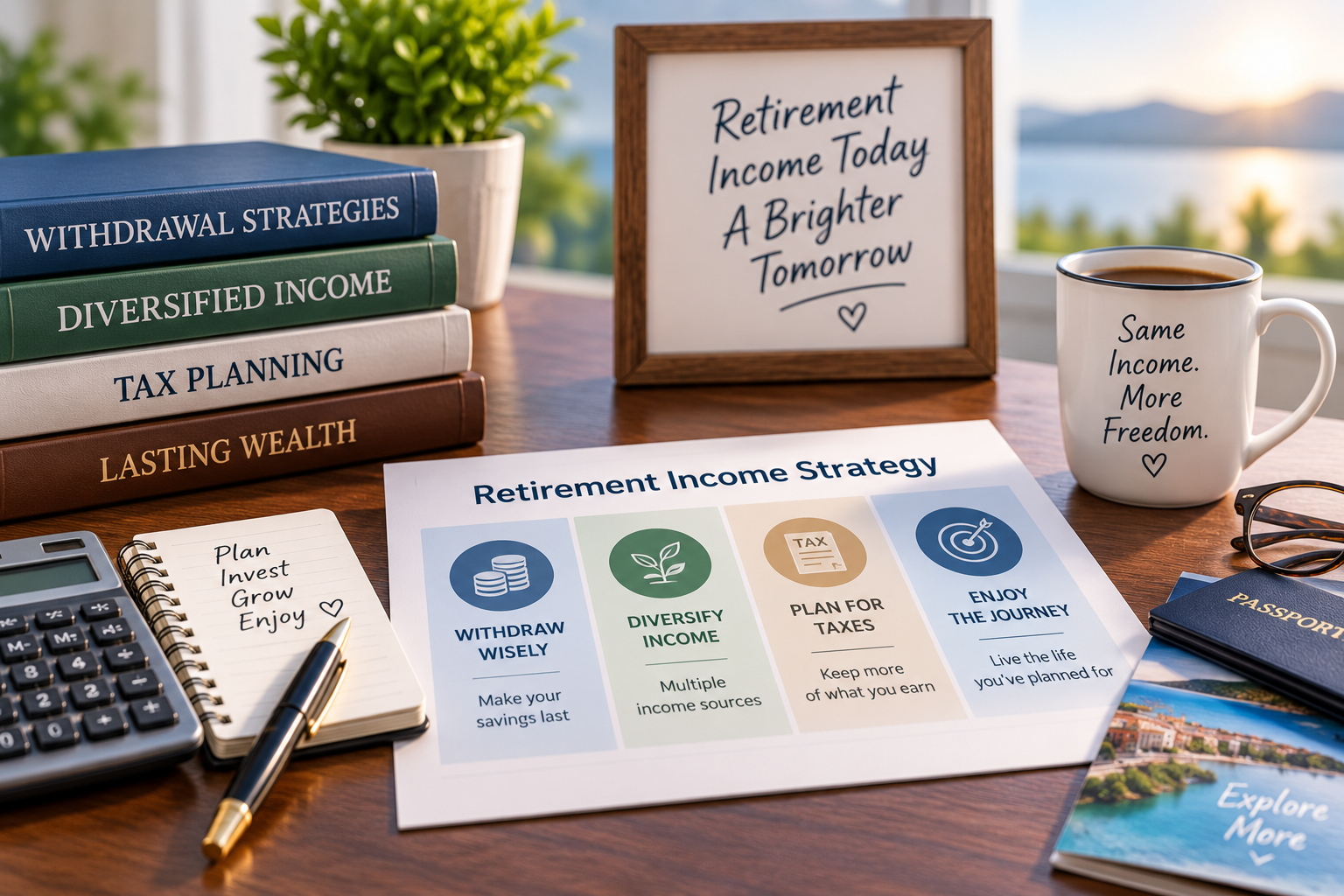
Once you’ve accumulated enough assets for retirement, the next step is creating a plan for how to generate income from those assets during retirement. This requires balancing withdrawals, minimizing taxes, and ensuring that your money lasts throughout your retirement:
Withdrawal Strategies:
- The 4% Rule: A commonly used retirement-planning guideline suggests withdrawing approximately 4% of your retirement portfolio in the first year of retirement and adjusting subsequent withdrawals for inflation. The rule was developed around a roughly 30-year retirement period and should be viewed as a guideline rather than a guarantee. Your appropriate withdrawal rate may vary based on market conditions, portfolio allocation, spending needs, and retirement length.
- Dynamic Withdrawals: Some retirees opt for a flexible withdrawal strategy, where they adjust the withdrawal rate based on market conditions or personal spending needs.
Creating Diversified Income Streams:
- Social Security: Social Security benefits will likely form part of your retirement income. The timing of your Social Security benefits and the strategy for claiming them can significantly impact your income.
- Pension and Annuities: If you have a pension or purchase an annuity, these can provide predictable, guaranteed income streams.
- Dividend Stocks and Bonds: Investment income from dividends and interest can supplement your retirement income and provide steady cash flow.
Tax Considerations:
- Tax-Deferred Accounts: Withdrawals from 401(k)s and traditional IRAs are taxable, so it’s essential to plan for taxes when taking distributions.
- Roth IRA Withdrawals: Qualified Roth IRA withdrawals are generally tax-free, which can provide a valuable source of tax-free income during retirement.
- Strategic Withdrawals: You may want to withdraw funds from taxable accounts first and delay tapping into tax-deferred accounts until necessary to minimize taxes during retirement.
Conclusion
Retirement planning is a long-term process that requires careful consideration of saving, investing, and creating a sustainable income strategy. Whether you are aiming for a traditional retirement at age 65 or pursuing early retirement through the FIRE movement, the key is to start early, save diligently, and make informed decisions about your retirement accounts. With a solid plan in place, you can enjoy the financial freedom to retire on your own terms.